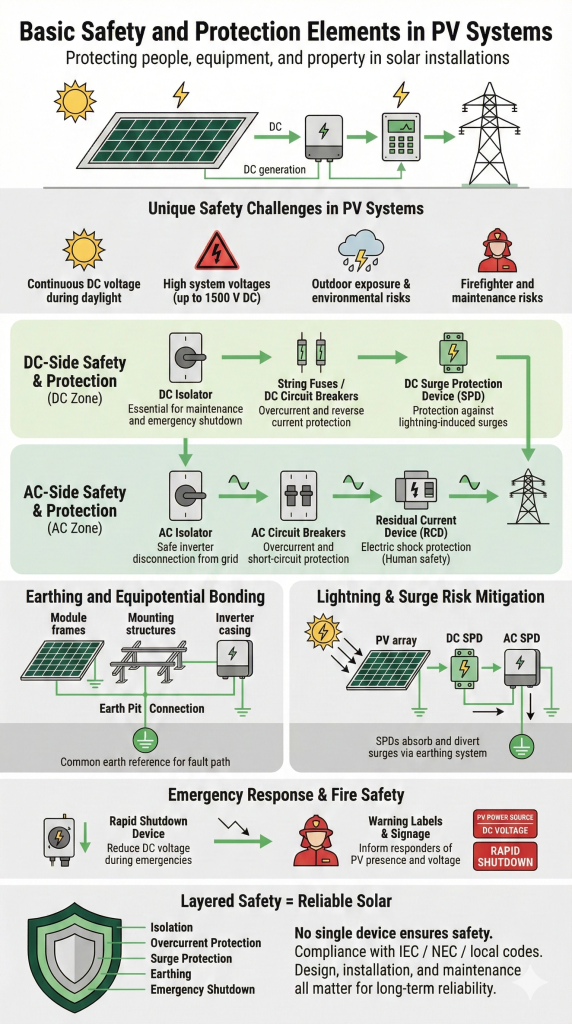
As solar photovoltaic (PV) systems become mainstream electrical infrastructure, safety is no longer optional—it is foundational. Figure illustrates the basic safety and protection elements integrated into PV systems to safeguard people, equipment, and property. Unlike conventional electrical systems, PV installations introduce unique risks due to continuous DC generation, high voltages, and outdoor exposure.
One of the most critical protection components is the DC isolator. Installed between the PV array and the inverter, DC isolators allow technicians to safely disconnect the array during maintenance or emergencies. Because PV modules generate voltage whenever exposed to light, isolation on the DC side is essential for preventing electric shock and arc flash hazards.
Overcurrent protection devices, such as fuses and DC-rated circuit breakers, protect against excessive current caused by faults or short circuits. These devices prevent conductor overheating and reduce fire risk. In PV systems, overcurrent protection must be carefully coordinated due to the unique current-limiting behavior of solar modules.
Surge protection devices (SPDs) defend PV systems against transient overvoltages caused by lightning strikes and grid switching events. Both DC-side and AC-side SPDs are commonly installed, particularly in regions with high lightning activity. Without surge protection, sensitive inverter electronics can suffer catastrophic damage.
Earthing and bonding systems form the backbone of electrical safety. Proper grounding provides a low-resistance path for fault currents and stabilizes system voltage with respect to earth. In PV systems, all exposed conductive parts—module frames, mounting structures, inverter enclosures—must be bonded to a common earth network.
On the AC side, residual current devices (RCDs) and AC circuit breakers protect against electric shock and overcurrent conditions. These devices function similarly to those in conventional electrical installations but must be selected and rated to accommodate inverter-generated waveforms.
Modern safety standards also emphasize rapid shutdown mechanisms, especially in rooftop systems. These devices reduce DC voltage to safe levels within seconds of grid disconnection, protecting firefighters and first responders during emergencies. Rapid shutdown has become mandatory in several international electrical codes.
Figure underscores that safety is a system-level outcome. No single device can eliminate all risks. Instead, layered protection—often referred to as the “defense-in-depth” approach—ensures that if one safeguard fails, others remain effective.
For designers and installers, adherence to standards such as IEC, NEC, and local electrical codes is non-negotiable. Proper labeling, signage, and documentation further enhance safety by ensuring that system behavior is clearly communicated to operators and emergency personnel.
As PV systems scale in size and voltage, safety considerations grow in importance. Figure serves as a reminder that reliable solar power depends not only on energy generation but also on rigorous protection strategies that prioritize human and asset safety.