
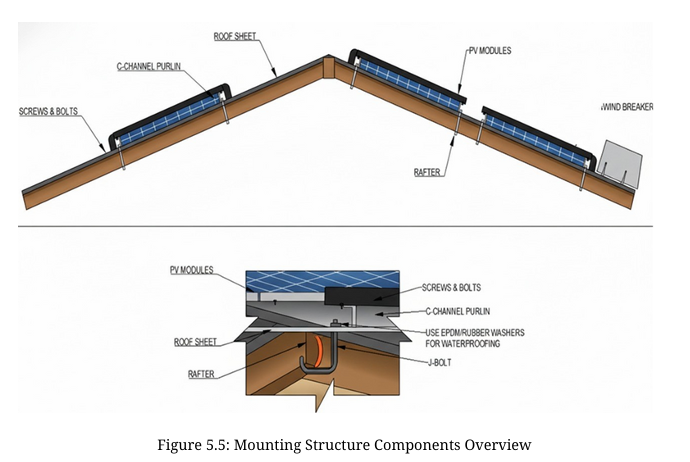
In any rooftop solar photovoltaic (PV) installation, the mounting structure plays a role that is just as critical as the solar modules themselves. While PV panels are responsible for energy generation, it is the mounting system that ensures structural integrity, safety, durability, and long-term performance. The illustrated diagram presents a comprehensive overview of typical mounting structure components used in pitched roof installations, highlighting how mechanical design and civil considerations come together to support a reliable solar system.
At the foundation of the structure is the roof framework, typically consisting of rafters and roof sheets. Rafters are the primary load-bearing members that transfer the combined weight of the roof and solar installation to the building structure. Any rooftop solar system must be carefully integrated with these rafters to ensure that loads from panels, wind pressure, and maintenance activities are safely distributed without overstressing the roof.
Mounted above the roof sheet are channel purlins, which act as intermediate structural members. These purlins provide a flat, aligned surface for installing PV modules and help distribute loads evenly across multiple rafters. Their alignment and spacing are critical, as improper purlin placement can lead to uneven loading, vibrations, or long-term fatigue of the mounting system.
The PV modules are secured to the purlins using screws and bolts, often in combination with specially designed clamps. These fasteners must meet stringent mechanical strength and corrosion resistance requirements, especially in outdoor environments exposed to moisture, temperature variations, and wind. High-quality fasteners ensure that modules remain securely fixed throughout the system’s operational life.
A key detail shown in the image is the use of EPDM or rubber washers for waterproofing. Wherever bolts penetrate the roof sheet, these washers form a seal that prevents water ingress, protecting the roof from leaks and long-term damage. Waterproofing is a crucial design consideration, particularly for industrial and commercial buildings where roof failure can result in significant operational disruption.
The J-bolt connection illustrated provides a robust anchoring method by directly fastening the mounting structure to the rafter. This ensures that uplift forces caused by wind are resisted effectively. In regions with high wind speeds, additional components such as wind breakers may be installed at the edges of the array to reduce wind turbulence and uplift pressure on the modules.
Overall, this mounting structure design demonstrates how mechanical engineering, material selection, and installation practices work together to create a safe and durable rooftop solar system. A well-designed mounting structure not only protects the building but also ensures optimal panel alignment, reduced maintenance issues, and consistent energy generation over decades