The global electricity system is undergoing one of the most significant transformations in history. For decades, power systems were designed around large centralised power plants that generated electricity and transmitted it across long distances to consumers. Today, this traditional model is evolving into a decentralised, intelligent, and renewable-driven energy ecosystem. This transition is not only technological but also environmental, economic, and societal.
This article explains the four major stages of power system evolution and how they are shaping the future of energy.
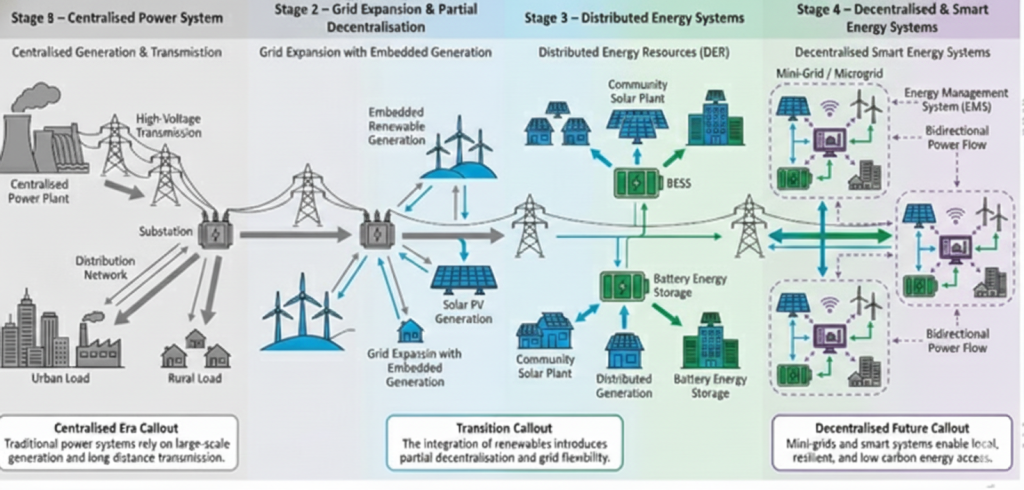
Stage 1: Centralised Power Systems
The earliest electricity networks were built on a simple and efficient concept: generate electricity at large power plants and deliver it to consumers through transmission and distribution networks.
In this model, power plants such as coal, hydro, gas, or nuclear facilities produced electricity at large scale. High-voltage transmission lines carried this electricity over long distances to substations, where the voltage was reduced and distributed to cities, industries, and rural areas.
This approach enabled rapid industrialisation and urban development. It made electricity widely available and supported economic growth across the world. However, the centralised model also introduced several limitations.
Long-distance transmission led to energy losses. The system depended heavily on fossil fuels, resulting in environmental impacts and greenhouse gas emissions. The grid was also vulnerable to failures because large portions of the network depended on a few major power plants. If one major plant failed, the impact could be widespread.
While centralised grids served the world well for decades, growing energy demand and climate concerns highlighted the need for a more flexible and sustainable approach.
Stage 2: Grid Expansion and Embedded Renewable Generation
The second stage of power system evolution began when renewable energy technologies became more viable. Wind and solar energy started being integrated into the grid alongside traditional generation.
This phase introduced the concept of embedded generation. Instead of producing electricity only at massive centralised plants, smaller renewable energy facilities were connected directly to the distribution network. Wind farms, solar parks, and small hydro plants began supplying electricity closer to where it was consumed.
This shift marked the beginning of decentralisation. Electricity no longer flowed in a strictly one-directional path from power plants to consumers. Renewable energy started contributing significantly to the grid.
This stage brought several benefits. Transmission losses were reduced because electricity was generated closer to consumption points. Carbon emissions began to decrease as renewable energy replaced fossil fuels. Energy security improved by diversifying generation sources.
However, renewable energy introduced a new challenge: variability. Solar and wind generation depend on weather conditions, which made supply less predictable. This required new solutions to maintain grid stability.
Stage 3: Distributed Energy Resources (DER)
The third stage marked a major transformation: electricity generation became highly distributed. Instead of relying primarily on utility-scale renewable plants, energy began to be generated at the community and household level.
Distributed Energy Resources include rooftop solar panels, small wind turbines, community solar projects, and battery energy storage systems. Homes, offices, and commercial buildings started generating their own electricity.
This gave rise to the concept of the “prosumer.” Consumers were no longer passive users of electricity. They could produce their own power and even supply excess electricity back to the grid.
Battery energy storage became a critical technology during this phase. Batteries store excess renewable energy generated during sunny or windy periods and release it when demand is high or generation is low. This helped solve the intermittency problem associated with renewables.
The grid evolved from a simple delivery system into a complex network where electricity could flow in multiple directions. Energy was no longer just consumed; it was shared, stored, and managed dynamically.
Stage 4: Decentralised Smart Energy Systems
We are currently entering the fourth and most advanced stage of power system evolution: decentralised smart energy systems.
This stage integrates digital technology with energy infrastructure. Smart grids use advanced communication, automation, and analytics to manage electricity in real time. Electricity now flows bidirectionally, allowing energy exchange between homes, businesses, and the grid.
Microgrids and mini-grids are key components of this stage. These local energy networks can operate independently or connect to the main grid. During outages, microgrids can continue supplying power, improving resilience and reliability.
Energy Management Systems play a vital role by optimising energy use. They monitor consumption, forecast demand, and automatically adjust supply to maintain balance.
Electric vehicles are also becoming part of the energy ecosystem. They act as mobile batteries that can store electricity and feed it back into the grid when needed.
This stage represents the emergence of an energy internet—an interconnected system where electricity is generated, stored, shared, and optimised intelligently.
Why This Transition Is Important
The shift from centralised to decentralised energy systems has far-reaching implications.
Environmentally, it supports the transition to low-carbon energy and helps combat climate change. Economically, it creates new industries and job opportunities in renewable energy, storage, and smart technologies. Socially, it empowers communities by giving them greater control over their energy production and consumption.
Decentralised systems also enhance resilience. Local generation and storage reduce the risk of widespread outages and improve disaster recovery.
The Role of Battery Energy Storage
Battery Energy Storage Systems are essential for modern power systems. They stabilise the grid by storing excess energy and supplying it during peak demand. They support renewable integration and enable efficient energy management.
Without storage, large-scale adoption of renewable energy would be extremely challenging.
The Future of Energy
The electricity grid is evolving into a dynamic, decentralised, and intelligent network. Homes, businesses, vehicles, and communities will actively participate in energy generation and management.
The future energy system will be cleaner, smarter, and more resilient. It will rely on local renewable energy, digital technologies, and advanced storage solutions.
The transformation of power systems is not just an engineering milestone—it is a global shift toward sustainable living.