
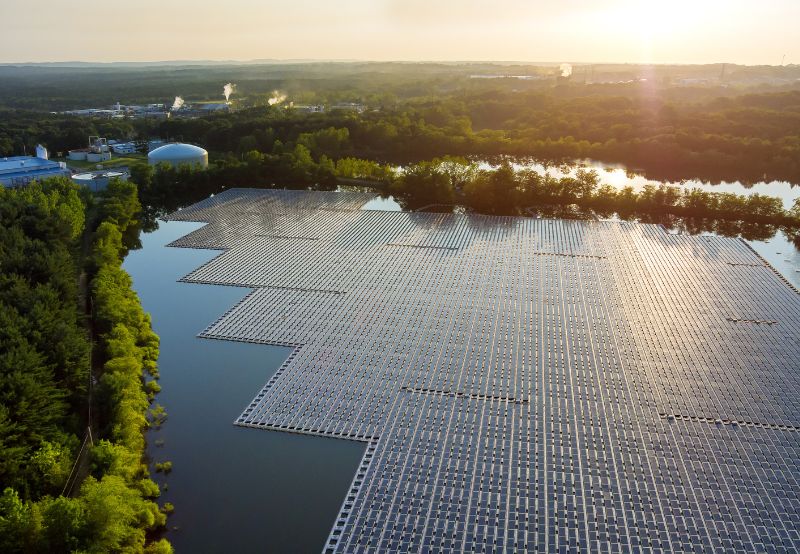
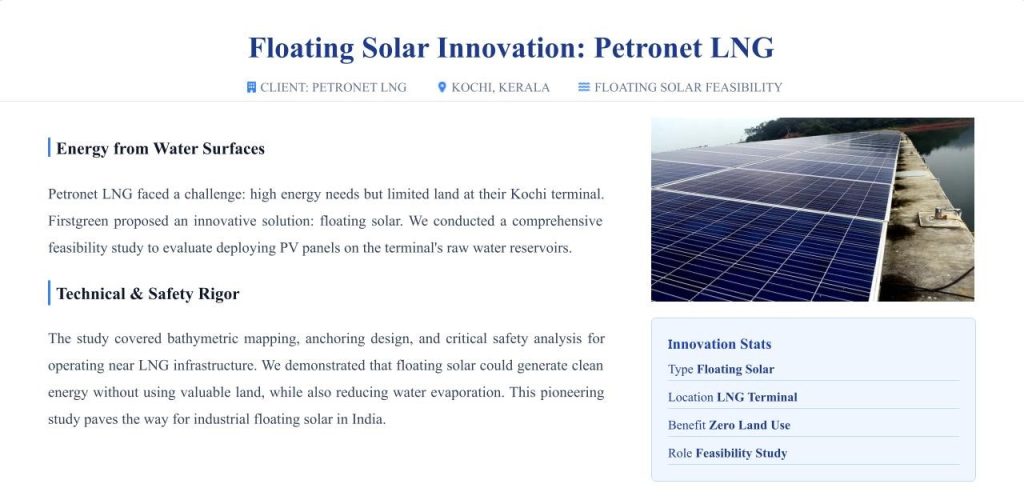
Petronet LNG, one of India’s leading energy infrastructure enterprises, sought an innovative pathway to meet rising power demand at its Kochi terminal, where available land for renewable installations was extremely limited. To address this constraint, Firstgreen conducted a comprehensive feasibility study exploring the deployment of floating solar PV systems on the terminal’s raw water reservoirs—an approach designed to maximize renewable generation without consuming valuable land resources.
The study began with a detailed assessment of site conditions to determine the technical and operational viability of a floating solar solution in a high-sensitivity industrial environment. Firstgreen carried out bathymetric investigations to evaluate water depth, surface stability, and load-bearing capabilities essential for anchoring floating PV structures. This was complemented by an extensive review of environmental and operational constraints, particularly those associated with proximity to LNG infrastructure where safety standards are stringent.
A key focus of the feasibility study was the integration strategy for connecting floating solar generation with the terminal’s existing electrical system. Firstgreen examined energy yields, technology configurations, inverter specifications, and cable-routing methodologies to ensure operational efficiency and system reliability. The team also modelled energy output scenarios to quantify generation potential and to evaluate the project’s financial attractiveness under various performance conditions.
Safety engineering formed a critical component of the analysis. Firstgreen evaluated anchoring designs, wind loads, and emergency access protocols to ensure compliance with industrial safety norms. Additionally, the study highlighted secondary benefits such as reduced water evaporation and improved reservoir performance due to partial shading from PV modules.
The feasibility assessment confirmed that floating solar offers Petronet LNG a strategic, land-neutral clean energy opportunity capable of supporting long-term sustainability goals. By demonstrating the technical, environmental, and financial viability of this solution, the study lays the groundwork for India’s broader adoption of floating solar in industrial settings.