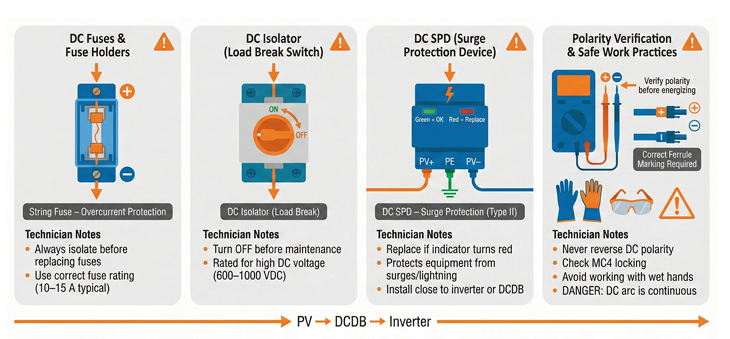
Direct Current (DC) circuits form the backbone of any solar photovoltaic (PV) system, carrying power from the PV modules to the inverter through combiner boxes and protection devices. Unlike AC, DC does not naturally cross zero, making fault interruption, isolation, and safe handling more critical. The illustrated diagram highlights four essential DC-side components and practices—DC fuses, DC isolators, DC surge protection devices (SPDs), and polarity verification with safe work practices. Together, these elements ensure system safety, reliability, and compliance with electrical standards.
This article explains the role of each component, how they work together, and why they are mandatory in well-designed solar PV installations.
Overview of the DC Power Path
In a typical solar PV system, power flows from PV modules → DC combiner box (DCDB) → inverter. Along this path, DC protection devices are installed to manage overcurrent, isolate circuits for maintenance, protect against surges, and prevent polarity-related failures. Proper DC protection not only safeguards equipment but also protects technicians from serious electrical hazards.
1. DC Fuses and Fuse Holders – Overcurrent Protection
Purpose and Function
DC fuses are designed to protect PV strings and downstream equipment from overcurrent and short-circuit conditions. When current exceeds the rated value, the fuse element melts and interrupts the circuit, preventing damage to cables, modules, and inverters.
In solar applications, string fuses are typically installed in the DCDB, one per string, especially where multiple strings are connected in parallel.
Key Characteristics
- Rated specifically for DC voltage and current
- Typical string fuse ratings range from 10–15 A
- Installed in dedicated fuse holders for safe replacement
- Prevent reverse current flow from parallel strings
Technician Notes
- Always isolate the circuit before replacing fuses
- Use only manufacturer-recommended fuse ratings
- Never bypass a blown fuse
Importance
DC fuses are the first line of defense against electrical faults on the PV side. Incorrect fuse selection or omission can result in cable overheating, fire risk, and inverter failure.
2. DC Isolator (Load Break Switch) – Safe Isolation
Purpose and Function
A DC isolator is a manually operated switch used to safely disconnect the PV array from the inverter or DCDB. It enables safe maintenance, troubleshooting, and emergency shutdown by physically breaking the DC circuit.
Unlike simple disconnects, DC isolators are designed as load break switches, capable of interrupting DC current without sustaining internal arcing.
Key Characteristics
- Clearly marked ON / OFF positions
- Rated for high DC voltages (typically 600–1000 VDC)
- Installed near the inverter or within the DCDB
- Lockable in OFF position for maintenance safety
Technician Notes
- Always turn OFF the DC isolator before maintenance
- Ensure voltage rating matches system design
- Periodically inspect for wear or heat damage
Importance
DC isolators are critical for personnel safety. They allow technicians to work on inverters and DC equipment without exposure to live PV voltage, which can be present even when AC supply is disconnected.
3. DC SPD (Surge Protection Device) – Lightning and Surge Protection
Purpose and Function
DC SPDs protect solar PV systems from transient overvoltages caused by lightning strikes, grid switching events, or nearby electrical disturbances. These surges can instantly damage sensitive inverter electronics if not properly diverted to earth.
A Type II DC SPD is commonly used in PV systems and is installed between PV+ / PV– and earth.
Key Characteristics
- Visual status indicator (Green = Healthy, Red = Faulty)
- Connected to system earth for surge diversion
- Installed close to inverter or inside DCDB
- Designed specifically for PV DC applications
Technician Notes
- Replace SPD immediately if the indicator turns red
- Ensure proper earthing continuity
- Install as close as possible to protected equipment
Importance
SPDs significantly reduce the risk of catastrophic inverter damage and system downtime. Without proper surge protection, even a distant lightning event can cause irreversible losses.
4. Polarity Verification and Safe Work Practices
Purpose and Function
Correct polarity is essential in DC systems. Reversed polarity can damage inverters, SPDs, and monitoring devices instantly. Polarity verification ensures that PV+ and PV– are correctly identified and connected before energizing the system.
Key Practices
- Verify polarity using a DC multimeter before energization
- Use correct ferrules, tags, and color coding
- Ensure MC4 connectors are fully locked
- Avoid working with wet hands or in damp conditions
Technician Notes
- Never reverse DC polarity
- DC arcs are continuous and extremely dangerous
- Follow lockout–tagout (LOTO) procedures
Importance
Many DC-side failures occur due to human error during installation or maintenance. Proper verification and disciplined work practices eliminate avoidable faults and enhance overall system safety.
Integration of DC Protection Devices
Each of these components plays a specific role, but their true value lies in system-level coordination:
- DC fuses limit fault current
- DC isolators provide safe manual disconnection
- DC SPDs protect against external surges
- Polarity checks prevent internal equipment damage
Together, they create a robust and compliant DC protection scheme aligned with IEC and national electrical standards.
Regulatory and Compliance Considerations
- DC protection devices must comply with IEC / IS standards
- Clear labeling and warning signage are mandatory
- Earthing continuity is essential for SPD effectiveness
- Periodic inspection and maintenance are required
Failure to comply can result in safety violations, insurance issues, and system rejection during inspection.
Conclusion
DC-side protection is not optional—it is fundamental to the safety, performance, and longevity of any solar PV system. Proper selection, installation, and maintenance of DC fuses, isolators, SPDs, and strict adherence to polarity and safety practices ensure reliable operation and protect both equipment and personnel. A well-protected DC system is the foundation of a safe and bankable solar installation.