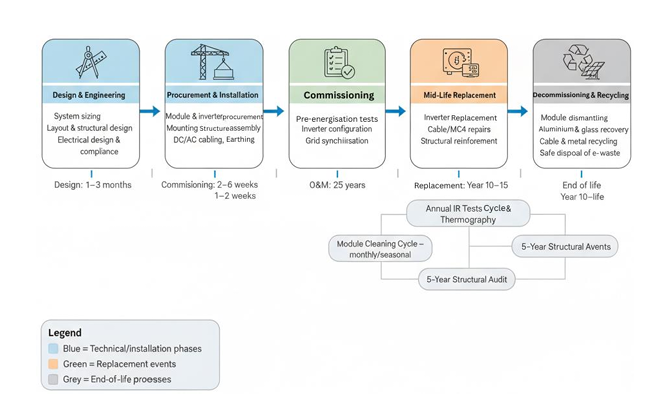
A solar photovoltaic (PV) system is not a one-time installation—it is a long-term infrastructure asset that must be managed across multiple technical, operational, and financial phases. The lifecycle diagram clearly shows that a solar project extends far beyond engineering and construction, covering decades of operation, planned replacements, and eventual decommissioning and recycling.
Understanding and actively managing each phase of the solar asset lifecycle is essential for maximizing energy yield, controlling costs, ensuring safety, and protecting long-term return on investment. A structured lifecycle approach transforms solar from a short-term project into a resilient, high-performing energy asset.
Design and Engineering: Setting the Foundation
The lifecycle begins with design and engineering, typically spanning one to three months. This phase defines the technical DNA of the project. Key activities include system sizing, layout and structural design, electrical single-line diagrams (SLDs), and compliance with applicable electrical, structural, and grid codes.
Decisions made at this stage have long-lasting consequences. Conservative structural design reduces long-term maintenance and wind damage risks. Proper electrical design ensures voltage windows, protection coordination, and cable sizing that minimize losses and prevent nuisance tripping. A well-engineered layout also improves accessibility for future maintenance, reducing O&M costs over the project life.
Procurement and Installation: Translating Design into Reality
Procurement and installation typically take several weeks and convert design intent into physical infrastructure. This phase includes module and inverter procurement, mounting structure assembly, DC and AC cabling, earthing, and mechanical installation.
Quality control during installation is critical. Poor workmanship at this stage—such as incorrect torque, improper crimping, or poor cable routing—often becomes the root cause of failures years later. Strong installation supervision, adherence to method statements, and inspection checklists ensure that hidden defects are minimized before commissioning.
Component selection during procurement also affects long-term performance. Choosing equipment based only on lowest price often increases future replacement and O&M costs. Lifecycle-aware procurement balances upfront cost with durability, warranty strength, service support, and long-term reliability.
Commissioning: Validating System Readiness
Commissioning is the formal transition from construction to operation. This phase includes pre-energization tests, inverter configuration, protection verification, and grid synchronization. Electrical tests such as insulation resistance testing, polarity checks, and earthing resistance measurements confirm that the system meets safety and performance requirements.
A robust commissioning process reduces early-life failures and ensures that the system operates as designed. Commissioning data also provides a valuable baseline for future performance comparison and warranty claims.
Operations and Maintenance: The Longest Phase
The O&M phase, spanning 20 to 25 years, represents the longest and most financially significant portion of the lifecycle. During this period, the solar plant must deliver consistent energy while managing gradual component aging and environmental exposure.
Core O&M activities include:
- Preventive maintenance inspections
- Corrective maintenance and fault response
- Module cleaning (monthly or seasonal)
- Performance monitoring and analysis
- Periodic electrical testing
- Thermographic inspections
Well-structured O&M programs focus on early detection of degradation and faults. This minimizes downtime, reduces repair costs, and protects long-term system health. Poor O&M, by contrast, accelerates degradation and increases the frequency of unplanned outages.
Mid-Life Replacement: Planning for Wear and Aging
Most solar PV systems require planned replacements around years 10 to 15. Inverters are the most common mid-life replacement item, as their operational life is typically shorter than that of PV modules.
Other mid-life activities may include:
- Cable and MC4 connector repairs
- Surge protection device replacements
- Structural reinforcement or corrosion repairs
- Monitoring system upgrades
These replacements represent a major financial and operational milestone. Projects that fail to plan for them face cash flow disruptions and extended downtime. Lifecycle-based financial models explicitly account for these events to ensure realistic long-term budgeting.
Periodic Testing and Structural Audits
The diagram also highlights recurring technical assessments that support long-term reliability. Annual insulation resistance testing and thermography help identify insulation degradation, hot spots, and loose connections before they cause failures.
Five-year structural audits verify mounting system integrity, corrosion protection, and mechanical stability. These audits are especially important in high-wind, coastal, or industrial environments where corrosion and fatigue are accelerated.
Regular testing and audits transform maintenance from reactive to predictive, reducing both technical and financial risk.
Decommissioning and Recycling: Responsible End-of-Life
At the end of the asset life—typically around 20 to 25 years—decommissioning and recycling become the final lifecycle phase. This includes dismantling PV modules, recovering aluminum and glass, recycling cables and metals, and safely disposing of electronic waste.
Responsible end-of-life planning reduces environmental impact and can recover residual value from recyclable materials. Increasingly, regulations and sustainability frameworks require documented recycling and safe disposal practices, making this phase an important part of compliance and corporate responsibility.
Why Lifecycle Management Improves Financial Performance
Lifecycle-based asset management aligns technical decisions with financial outcomes. By planning for O&M, replacements, and end-of-life activities, owners reduce uncertainty and stabilize long-term cash flows. This improves bankability, supports refinancing, and strengthens investor confidence.
Projects managed with a full lifecycle mindset typically show:
- Lower total cost of ownership
- Higher long-term availability
- Fewer catastrophic failures
- Better warranty recovery
- Improved safety performance
Integrating Lifecycle Thinking into Project Strategy
To fully realize these benefits, lifecycle management must be embedded from the earliest project stages. This means:
- Designing for maintainability and access
- Selecting components based on lifecycle value, not just price
- Budgeting for mid-life replacements
- Implementing structured O&M and testing regimes
- Planning for compliant and sustainable decommissioning
This integrated approach turns solar plants into predictable, long-term infrastructure assets rather than short-term installations.
Conclusion
The solar PV lifecycle does not end at commissioning. From design and procurement to decades of operation, mid-life replacement, and final decommissioning, each phase carries technical, operational, and financial implications. Projects that actively manage this full lifecycle consistently outperform those that focus only on construction.
By adopting a lifecycle-based asset management strategy, solar stakeholders can protect performance, control costs, reduce risk, and ensure that their investments deliver reliable, long-term value from the first design drawing to the final recycled module.