Rooftop solar systems are often admired for their clean energy output and sleek appearance. However, what truly determines their long-term success lies beneath the panels — in the engineering precision of mounting structures and installation quality checks. A high-performing solar plant is not just about placing panels on a roof; it is the result of careful planning, structural decision-making, and meticulous installation practices.
This article explores the complete journey of rooftop solar installation, beginning with the selection of the right mounting system and ending with the critical quality checks that ensure optimal performance and durability.
The Importance of Mounting Systems in Rooftop Solar
Before a solar panel generates its first unit of electricity, the most important decision is how it will be secured to the roof. The mounting structure acts as the backbone of the solar system, ensuring stability, safety, and long-term reliability.
A poorly designed mounting solution can lead to structural damage, water leakage, reduced performance, or even system failure. Therefore, choosing the right mounting method is a foundational step in solar project design.
Two widely used mounting approaches dominate rooftop solar installations:
• Ballasted mounting (non-penetrating)
• Anchor-based mounting (penetrating)
Each system offers unique advantages and is suited to specific building types and environmental conditions.
Ballasted Mounting: A Non-Penetrating Solution
Ballasted mounting systems are designed to sit on the roof surface without drilling or penetrating the structure. Instead of mechanical fixation, they rely on weight — typically concrete ballast blocks — to keep the solar panels securely in place.
Rubber protective pads are placed between the mounting frame and the roof surface to prevent damage to waterproofing layers. This design makes ballasted mounting especially suitable for buildings where roof penetration is not permitted.
Key Benefits
One of the biggest advantages of ballasted mounting is the elimination of drilling. Since the roof membrane remains intact, the risk of water leakage is significantly reduced. This is particularly valuable for commercial buildings and industrial facilities where maintaining roof integrity is a priority.
Installation is also faster and less invasive. Without the need for civil work or structural anchoring, projects can be completed quickly with minimal disruption to building operations.
Another benefit is flexibility. Ballasted systems can be removed or relocated if the building undergoes renovation or structural changes, making them a future-ready solution.
Limitations
The primary challenge of ballasted mounting is weight. Concrete ballast blocks add significant load to the roof, which means the building must have adequate structural capacity. Structural assessments are essential before installation.
Wind resistance is also gravity-based, meaning the system may require additional ballast in high-wind regions.
Ballasted mounting is most commonly used in large commercial buildings with flat roofs and strong structural capacity.
Anchor-Based Mounting: Structural Grip and Stability
Anchor-based mounting systems are mechanically fixed into the roof structure using bolts and chemical anchors embedded in reinforced concrete. This approach creates a strong structural grip capable of withstanding high wind loads and harsh environmental conditions.
Key Benefits
The biggest advantage of anchor-based mounting is superior wind resistance. Because the structure is firmly fixed to the building, it performs exceptionally well in high-rise buildings and windy regions.
This system also places less weight on the roof, making it suitable for residential buildings or roofs with limited load-bearing capacity.
Another advantage is space efficiency. Without ballast blocks, installations can accommodate more panels within limited roof space, improving energy generation potential.
Limitations
The main concern with anchor-based mounting is roof penetration. Drilling into the roof requires professional waterproof sealing to prevent leakage. Installation may also take longer due to civil work requirements.
Despite these challenges, anchor-based mounting is widely preferred for residential and high-rise applications due to its structural strength.
Choosing the Right Mounting System
Selecting between ballasted and anchor-based mounting depends on several factors:
• Roof load capacity
• Building height
• Wind conditions
• Waterproofing sensitivity
• Project timeline
• Future relocation requirements
Commercial buildings with strong flat roofs often favor ballasted systems, while residential and high-rise buildings typically rely on anchor-based mounting for safety and durability.
Why Installation Precision Matters
Once the mounting method is chosen, the installation phase becomes critical. Even the best design can fail if the installation lacks precision. Small errors during mounting can lead to reduced energy production, structural stress, or premature equipment failure.
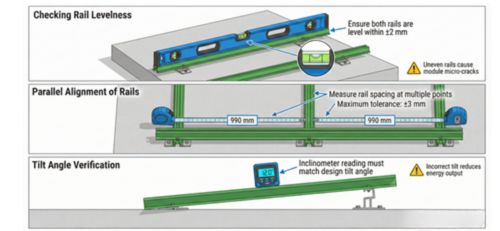
Three essential quality checks ensure that solar systems perform at their best:
• Rail levelness verification
• Parallel alignment of rails
• Tilt angle verification
These checks form the backbone of quality assurance in solar installation.
Rail Levelness: The Foundation of Stability
Solar panels are mounted on rails, and these rails must be perfectly level. Even slight unevenness can create uneven load distribution, causing long-term structural stress.
Ensuring rail levelness prevents:
• Uneven weight distribution
• Panel misalignment
• Long-term structural damage
Precision leveling tools are used to maintain strict tolerances during installation. This step ensures the mounting structure supports the solar array safely and evenly.
Parallel Alignment of Rails: Preventing Micro-Cracks
Rails must be perfectly parallel and spaced correctly to ensure proper panel fitting. Misalignment may appear minor during installation but can cause serious long-term issues.
Improper spacing can lead to:
• Mechanical stress on panels
• Micro-cracks in solar cells
• Reduced system lifespan
• Lower energy generation
Measuring rail spacing at multiple points ensures consistent alignment and long-term durability.
Tilt Angle Verification: Maximizing Energy Output
The tilt angle of solar panels determines how much sunlight they capture throughout the year. Even small deviations from the optimal angle can reduce energy generation significantly.
Using an inclinometer, installers verify that the tilt angle matches the system design. Correct tilt ensures:
• Maximum sunlight exposure
• Higher energy generation
• Improved return on investment
This step directly impacts the efficiency and financial performance of the solar system.
The Role of Quality Assurance in Solar Success
Precision installation transforms a solar project from good to exceptional. Quality checks ensure that the system delivers:
• Maximum efficiency
• Long-term reliability
• Structural safety
• Optimal financial returns
Without these checks, even high-quality equipment may underperform.
The Bigger Picture: Engineering Meets Sustainability
Rooftop solar installations represent more than renewable energy — they symbolize the fusion of engineering precision and environmental responsibility.
From selecting the right mounting system to performing meticulous quality checks, every step contributes to a reliable and efficient solar future.
A well-installed solar system can operate for 25 years or more. The decisions made during installation determine whether the system merely works — or truly excels.
Conclusion
Successful rooftop solar installations are built on two pillars: strong mounting foundations and precise installation practices.
Ballasted and anchor-based mounting systems each offer unique benefits, and selecting the right one depends on building conditions and project requirements. Once installed, rigorous quality checks ensure that the system operates safely and efficiently for decades.
Solar panels may capture sunlight, but it is engineering precision that turns sunlight into long-term value.
0 Comments