
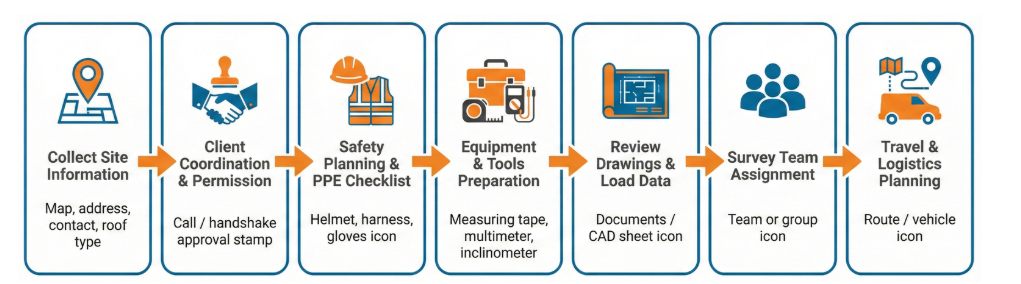
Before a solar photovoltaic (PV) system is ever installed on-site, a significant amount of planning and coordination takes place behind the scenes. The image illustrates a structured pre-site survey planning workflow, which is a critical phase in ensuring that the actual site visit is efficient, safe, and technically productive. Proper planning minimizes errors, reduces rework, and ensures that survey teams arrive fully prepared to collect accurate and actionable data. This blog explains each stage of the pre-survey process and highlights its importance in professional solar project execution.
1. Collect Site Information
The planning process begins with gathering basic but essential site details. This includes the site address, geographic location, roof or ground type, approximate available area, and client contact information. Understanding whether the project is residential, commercial, or industrial helps define survey complexity. Early clarity on site conditions allows teams to anticipate challenges and plan resources accordingly.
2. Client Coordination and Permission
Once preliminary information is collected, coordination with the client is essential. Site surveys often require formal permission, access approvals, or security clearances—especially in commercial or industrial facilities. Scheduling the visit at a mutually convenient time ensures the availability of key stakeholders, facility managers, or maintenance personnel. Clear communication at this stage builds trust and avoids access-related delays.
3. Safety Planning and PPE Checklist
Safety planning is a non-negotiable component of pre-survey preparation. Survey teams assess potential hazards such as rooftop work, electrical exposure, confined spaces, or fragile structures. Based on this assessment, a PPE checklist is prepared, including helmets, safety harnesses, gloves, safety shoes, and high-visibility vests. This step ensures compliance with occupational health and safety standards and protects survey personnel.
4. Equipment and Tools Preparation
Accurate site data depends on having the right tools. Survey teams prepare and verify equipment such as measuring tapes, laser distance meters, multimeters, inclinometers, compasses, and cameras. Batteries are checked, instruments are calibrated, and backups are arranged where possible. Proper tool preparation eliminates on-site inefficiencies and incomplete measurements.
5. Review of Drawings and Load Data
Before visiting the site, available drawings and documents are reviewed. These may include architectural layouts, structural drawings, single-line electrical diagrams, and historical load data or utility bills. Reviewing this information helps surveyors understand existing infrastructure, anticipate electrical integration points, and validate site conditions during the visit.
6. Survey Team Assignment
Based on project scale and complexity, the appropriate survey team is assigned. A small residential project may require a single engineer, while a large commercial installation may need a multidisciplinary team including structural, electrical, and safety specialists. Clear role allocation ensures efficient task execution and accountability during the survey.
7. Travel and Logistics Planning
The final step is travel and logistics coordination. Routes are planned, vehicles arranged, and access instructions confirmed. For remote or large sites, additional considerations such as permits, site escorts, or accommodation may be required. Effective logistics planning ensures the team arrives on time, fully prepared, and ready to execute the survey efficiently.
Conclusion
Pre-site survey planning is a critical yet often underestimated phase of solar PV project development. By systematically collecting information, coordinating with clients, preparing safety measures, reviewing documentation, and organizing logistics, project teams lay the groundwork for accurate site assessments and successful system design. A well-planned survey not only saves time and cost but also enhances safety, data quality, and overall project reliability.