Designing a Safe and Compliant Rooftop Solar PV System: Key Planning Principles
Rooftop solar PV systems are no longer evaluated only on energy generation. Modern installations—especially for commercial and institutional buildings—must comply with stringent requirements related to safety, accessibility, fire protection, and equipment longevity. A well-planned PV layout ensures not only regulatory compliance but also long-term operational reliability.
This article explains the critical design elements that define a safe and code-compliant rooftop solar PV installation.
1. Walkway Planning for Maintenance and Safety
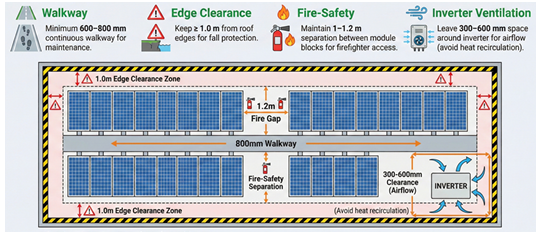
A continuous 600–800 mm wide walkway must be provided between PV module rows and around key equipment. These walkways serve multiple purposes:
- Safe access for maintenance and inspection
- Reduced risk of stepping on modules
- Clear movement paths during emergency situations
Proper walkways significantly reduce operational risks and maintenance downtime.
2. Edge Clearance for Fall Protection
A minimum 1.0 m edge clearance from all roof perimeters is a critical safety requirement. This clearance:
- Prevents fall hazards during installation and servicing
- Complies with occupational safety norms
- Avoids structural stress near roof edges
Edge setbacks are mandatory in most international rooftop safety guidelines.
3. Fire Safety Gaps Between PV Blocks
Fire safety is a major consideration in rooftop PV design. Maintaining a 1.2 m fire gap between PV array blocks ensures:
- Access for firefighting personnel
- Reduced fire propagation risk
- Ventilation pathways across the rooftop
Fire separation corridors also allow emergency responders to isolate affected areas efficiently.
4. Inverter Ventilation and Thermal Management
Inverters generate significant heat during operation. A 300–600 mm ventilation clearance around inverters ensures:
- Effective airflow
- Prevention of hot air recirculation
- Improved efficiency and longer inverter life
Poor ventilation can lead to thermal derating and frequent inverter shutdowns.
5. Integrated Safety-First Design Approach
An optimized rooftop PV layout balances maximum solar capacity with safety, compliance, and maintainability. By integrating walkways, fire gaps, and ventilation zones at the design stage, the system becomes:
- Easier to maintain
- Safer for personnel
- More reliable over its lifecycle
Conclusion
A rooftop solar PV system is a long-term infrastructure asset. Designing it with safety, access, and compliance at the core ensures uninterrupted performance, regulatory approval, and stakeholder confidence. Such layouts are especially critical for LEED-certified buildings, corporate campuses, and large commercial rooftops.