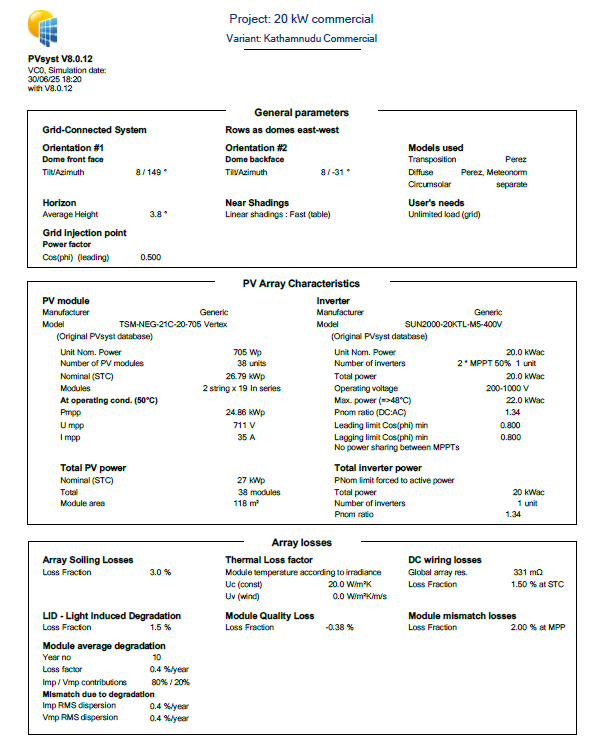
Once a site is deemed feasible, the project moves to Design and Sizing. This is where engineering meets economics. Designers select the module technology (e.g., Bifacial vs. Mono PERC), size the strings to match inverter voltage limits, and calculate the optimal DC/AC cable sizes to minimize voltage drop.
A critical output of this phase is the Energy Yield Estimation—a simulation (often using PVSYST) that predicts how many units the plant will generate annually. The design package also includes safety compliance checks against standards like IEC 60364.
Next comes Procurement and Material Validation. It’s not enough to just order parts; they must be validated. This involves checking module certifications (IEC 61215), ensuring cable ratings match the design (IEC 62930), and inspecting mounting structures for galvanization quality. This “Quality Gate” prevents substandard materials from entering the site, ensuring the plant is built to last 25 years.