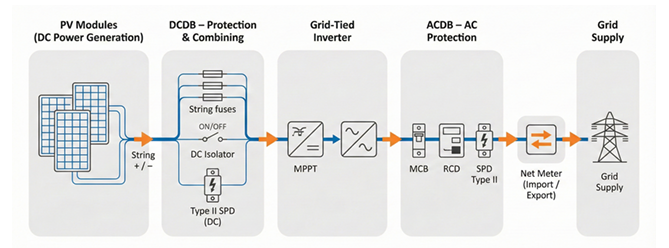
A grid-tied solar PV system is one of the most efficient and widely adopted renewable energy solutions today, and this diagram clearly illustrates how the entire system functions from generation to grid interaction. The process begins with PV modules that convert sunlight into DC electricity. These modules are connected in strings, producing the voltage required for efficient energy transfer. The generated DC power then flows into the DC Distribution Board (DCDB), where string fuses, DC isolators, and surge protection devices ensure safety, fault isolation, and protection against lightning-induced surges.
From the DCDB, electricity is fed into the grid-tied inverter, the core of the system. The inverter not only converts DC power into grid-synchronized AC power but also optimizes energy output using Maximum Power Point Tracking (MPPT). Advanced anti-islanding features ensure that the inverter shuts down automatically during grid outages, maintaining safety and compliance.
Once converted to AC, power passes through the AC Distribution Board (ACDB), which includes MCBs, RCDs, and AC surge protection devices. These components protect against overcurrent, earth leakage, and voltage surges before electricity reaches the net meter. The bi-directional net meter records both imported and exported energy, enabling seamless net metering and efficient energy management.
This integrated system allows consumers to reduce electricity costs, improve sustainability performance, and rely on the grid as a backup without the complexity of battery storage. Read more
0 Comments