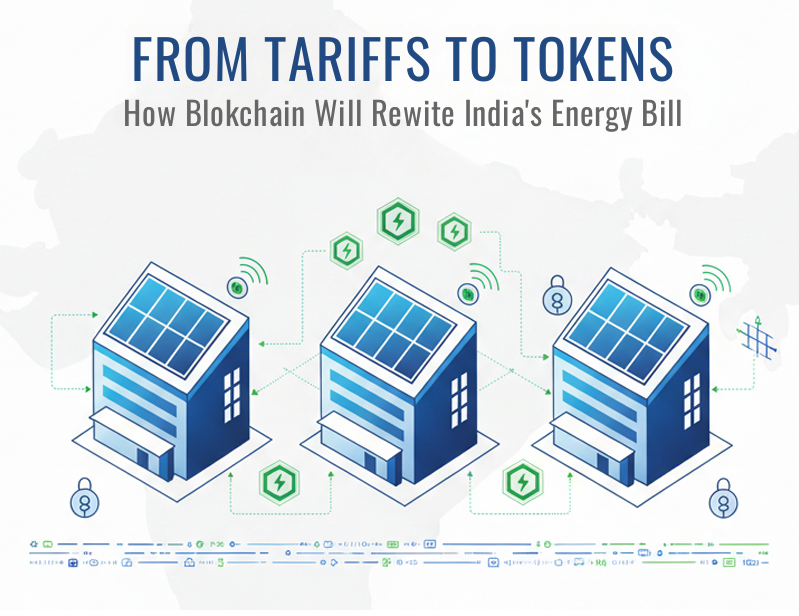
India’s electricity system is undergoing a historic shift — from a traditional tariff-based model to a tokenised, data-driven energy economy. With over 80 million smart meters installed and 250 million more on the way, every kilowatt-hour now carries valuable metadata: timestamp, source, carbon savings, and flexibility potential 3.
A solar kWh not only powers appliances — it avoids 0.7–1.1 kg of CO₂, adding ₹0.20–0.70/kWh in carbon value. Flexible loads, EV charging, and storage can add another ₹0.10–1.50/kWh. Combined with India’s 14+ billion monthly UPI transactions, micro-settlement energy trading becomes seamless, making a tokenised kWh 2–3× more valuable than electricity traded under traditional tariffs.At Firstgreen Consulting, we are helping organisations adopt these advanced market models — from blockchain-enabled energy trading to digital carbon platforms — accelerating India’s journey toward a cleaner, smarter, and more equitable energy future.