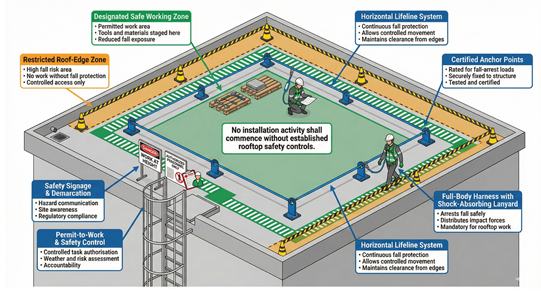
Rooftop solar PV installations expose workers to one of the most serious risks in construction and renewable energy projects: working at height. Falls from roofs remain a leading cause of serious injury and fatalities worldwide. The illustrated rooftop safety layout demonstrates how a well-designed fall protection and access control system creates a structured, compliant, and safer work environment for solar installation and maintenance teams.
Rather than relying only on personal caution, professional rooftop safety design uses engineered systems, clear zoning, and administrative controls to systematically reduce risk. These measures protect workers, support regulatory compliance, and ensure uninterrupted project execution.
Designated Safe Working Zones
At the heart of the layout is the designated safe working zone. This is the primary area where installation and maintenance activities are permitted. Materials, tools, and equipment are stored only within this controlled zone to avoid clutter near roof edges.
Clearly marking this area helps workers stay within protected boundaries and reduces the likelihood of accidental entry into high-risk locations. It also improves workflow efficiency by organizing materials and movement paths.
Restricted Roof-Edge Zones
The image highlights restricted roof-edge zones, which are among the most dangerous areas on any rooftop. These zones are clearly marked and controlled, with access limited to authorized personnel using fall protection systems.
Restricting access reduces unnecessary exposure to fall hazards and ensures that only trained and properly equipped workers operate near edges. This zoning approach is a core principle of modern height-safety planning.
Horizontal Lifeline Systems
A key engineered control shown is the horizontal lifeline system. These systems allow workers to move continuously along the rooftop while remaining connected to a fall arrest system.
Horizontal lifelines provide:
- Continuous fall protection
- Freedom of movement for installers
- Maintained clearance from roof edges
- Reduced need to disconnect and reconnect
This significantly lowers the risk of human error and improves productivity without compromising safety.
Certified Anchor Points
The layout includes certified anchor points that are rated for fall arrest loads and structurally tested. These anchors are fixed to approved structural elements and form the backbone of personal fall protection systems.
Certified anchors ensure that, in the event of a fall, the forces are safely transferred to the building structure. Using uncertified or temporary anchorage is a major safety violation and a leading cause of fall protection system failures.
Full-Body Harness and Shock-Absorbing Lanyards
Personal protective systems are also clearly represented, including full-body harnesses and shock-absorbing lanyards. These systems are mandatory when working in areas where collective protection is not sufficient.
Shock absorbers reduce the impact forces on the worker’s body and the anchor system during a fall. Proper selection, inspection, and use of this equipment are essential to prevent serious injury.
Access Control and Permit-to-Work Systems
The rooftop access ladder is supported by permit-to-work and safety control procedures. This administrative layer ensures that:
- Only authorized personnel access the roof
- Weather and risk assessments are completed
- Accountability is maintained
- Work is coordinated and supervised
Permit-to-work systems reduce unauthorized access and ensure that safety controls are verified before work begins.
Safety Signage and Hazard Communication
Clear safety signage and demarcation communicate hazards, restricted areas, and safety requirements. Visual communication is especially important on rooftops where multiple contractors or teams may be present.
Signage reinforces safe behavior, supports compliance, and helps prevent accidental entry into high-risk zones.
No Work Without Established Controls
A critical message in the image states that no installation activity should commence without established rooftop safety controls. This reflects best practice in occupational health and safety management.
Installing fall protection systems before solar installation begins ensures that safety is built into the project from the start, rather than treated as an afterthought.
Benefits of Integrated Rooftop Safety Planning
Proper rooftop safety planning delivers multiple benefits:
- Reduced risk of accidents and injuries
- Improved regulatory compliance
- Higher workforce confidence and morale
- Fewer project delays and shutdowns
- Lower liability and insurance exposure
From a business perspective, investing in engineered fall protection and structured safety zones is far more cost-effective than managing accidents, legal claims, and reputational damage.
Conclusion
Rooftop solar PV projects must treat fall protection as a core system, not a secondary accessory. The illustrated layout demonstrates how designated safe zones, restricted edge areas, horizontal lifelines, certified anchors, personal protective equipment, and administrative controls work together to create a safe and compliant rooftop environment.
By integrating safety into rooftop design and daily operations, project owners and EPCs protect their most valuable asset—their people—while ensuring smooth, efficient, and professional solar project delivery.
0 Comments