
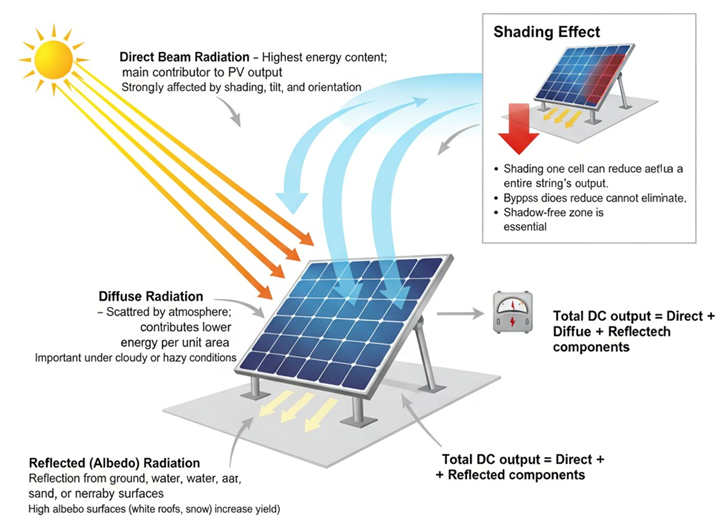
Not all sunlight reaches your solar panels in a straight line. Solar radiation incident on a PV module is actually a composite of three distinct components. Understanding these helps in designing systems that maximize yield, especially when using modern bifacial modules.
1. Beam (Direct) Radiation: This is the sunlight that reaches the surface without being scattered by the atmosphere. It creates distinct shadows and is the most potent component for power generation. It is highly dependent on cloud cover; a passing cloud blocks beam radiation almost entirely.
2. Diffuse Radiation: As sunlight passes through the atmosphere, it interacts with dust, aerosols, and water vapor. This scattering effect creates diffuse radiation, which arrives at the module from all directions of the sky dome. On cloudy or monsoon days, diffuse radiation becomes the primary source of energy. While less intense than beam radiation, it ensures that solar panels continue to generate power even without direct sun.
3. Reflected (Albedo) Radiation: This is the light reflected off the ground and surrounding surfaces onto the module. Historically considered minor, albedo has gained massive importance with the rise of bifacial modules, which can absorb light from the rear side. Surfaces like white cool roofs or snow can significantly boost this component, enhancing total generation.
Optimizing a PV plant involves managing these components—maximizing exposure to beam radiation via tilt, and potentially enhancing albedo for bifacial gains.